Category Archives: Uncategorized

Granum Translation Prize

I’m excited to announce: “Richard Prins has been selected as the 2026 Granum Foundation Translation Prize winner for his translation of Swahili writer Tom Olali’s experimental novel The People of Gehenna, which exacts revenge on the worst actors in contemporary Kenyon society by placing them in Hell following the tradition of Dante’s Inferno.”

It means a lot to have support for this unique, zany, experimental novel, and you can read an excerpt that was published a few years back by Michigan Quarterly Review.

Brain Flavour

My book Brain Flavour: A Lyric History of Swahili Hip-Hop was published last month. You can order it straight from Tenement Press, and check out a few of these excerpts and addenda that have appeared recently:

  1. Today the new issue of Asymptote went live, including some excerpts from interviews I did while researching the book with Swahili hip-hop pioneers and luminaries Sugu, Boni Luv, KBC of Kwanza Unit, and Natalia Mlula.
  2. Hopscotch Translation asked me to write about the translations in the book, and you can read “On Swahili Hip-Hop and the Insufficiency of Translation”.
  3. Equator Magazine also published some excerpts from translated songs in its debut (print) issue.

In other news, my translation-in-progress of Tom Olali’s experimental Swahili novel Watu wa Gehenna was just shortlisted for the Granum Translation Prize. You can read an excerpt that was published a few years back by Michigan Quarterly Review.

two books this spring

Brain Flavour: A Lyric History of Swahili Hip Hop is now available for pre-order with Tenement Press. Described as “A road movie of a run through Tanzanian rap in the second person, a riff on the possible punctum(s) of 21st-century East African popular song, a telefoto lens on a local music industry, an exploded documentary study of a cultural anadiplosis, a love letter to the artists and musicians of Swahili Hip-Hop on the brink of our millennium and beyond,” Brain Flavour is composed of my interviews with many of Tanzania’s pioneering rappers and producers, my  translations of Swahili rap songs, my personal adventures in Dar es Salaam’s music industry, as well as a political history of a nation and its music.

Because Tenement is a small, independent press, they have also put together a fundraiser to insure that all the artists whose lyrics I translated receive a fee for their work. By and large, these artists did not receive proper compensation for their music due to the predatory and haphazard nature of Tanzania’s music industry in the 90s and early 2000s (more on that in the book!). Any donation will be profoundly meaningful, and all supporters will be thanked in the book.

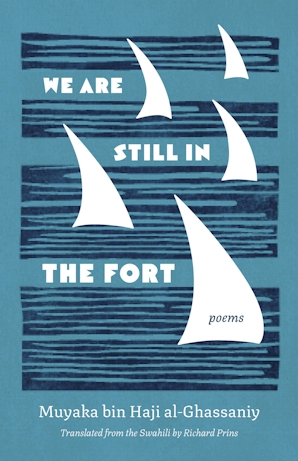
Next up, We Are Still in the Fort, my translation of the Swahili poet Muyaka bin Haji al-Ghassaniy, is also available for pre-order from Vanderbilt University Press. 

“How refreshing to see one of the major Kiswahili poets of the nineteenth century being given a new breath of life and being ‘resurrected’ for the English reading public! By beautifully translating some of Muyaka’s poems, with introductory notes for each of the three sections, Richard Prins has done a great service to the better understanding of Muyaka’s verse and further popularization of Kiswahili poetry in general.”

— Abdilatif Abdalla, author of Voice of Agony

(Abdilatif Abdalla is, in my view, the most important living Swahili poet, who wrote his first collection on toilet paper while serving as the first political prisoner of independent Kenya, so I am especially honored to have his support.)

Finally, I have a translation of the short story “Night Meal” by Lusajo Mwaikenda Israel in I Was Alive Here Once, a collection of ghost stories translated from several different languages, which was just published by Two Lines Press.

Hope you enjoy them all!

We May Eat Fruit

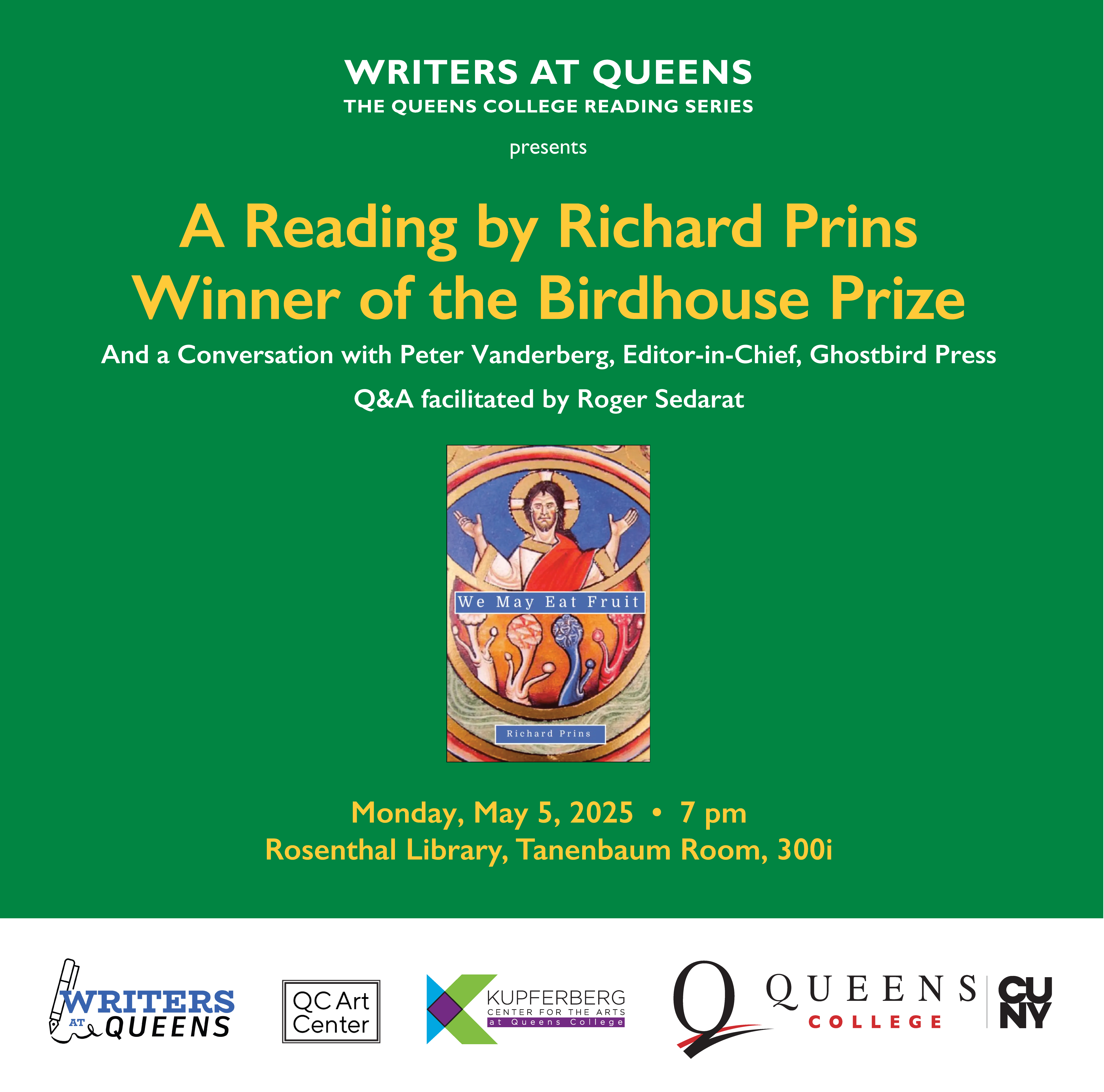
By some odd quirk of timing, I have three books coming out in the next year-or-so, and the first one is about to see the light of day. We May Eat Fruit won the 2024 Birdhouse Prize from Ghostbird Press. It is an odd little chapbook mostly consisting of found and manipulated texts from such sources as the Bible, Supreme Court confirmation hearings, and Florida Man headlines. There are also some original poems, translations of the Dutch poet Mariap van Urk, and even a glimpse of Billie Holiday’s FBI files.

The description from the publisher reads: “We May Eat Fruit is a daring and lyrical exploration of power, language, and myth, weaving biblical echoes with contemporary voices to challenge authority and unravel the narratives that shape our world. Richard Prins crafts a mosaic of poetic fragments, legal texts, and cultural allusions, inviting readers into a thought-provoking conversation on justice, gender, and the weight of history. Bold, unsettling, and deeply resonant, this book pulses with urgency and wit, offering a revelatory reading experience that lingers long after the final page.”

If you can’t schlep out to Queens for the reading next month, you can purchase it online!

In other news, I recently found out that two poems I translated – “Mkwawa” by Shaaban Robert and “[we are manly lions]” by Muyaka bin Haji al-Ghassaniy – have been longlisted for Best Literary Translations 2026. (I also had two Muyaka poems longlisted for Best Literary Translations 2025, which comes out this month, and should be a fascinating read if 2024’s inaugural edition is any indicator).

a few highlights

Today I learned that my book-in-progress — tentatively titled Brain Flavor: A Lyric History of Swahili Hip Hop — has been longlisted for the 2024 Granum Prize. I’m pleased to be in the company of the other longlisters, which includes more than one author whose work I’ve taught before. This book is a stew of political history, personal narrative, translations of lyrics, as well a body of oral history I collected this summer in Dar es Salaam, where I interviewed about thirty pioneering Swahili hip hop artists.

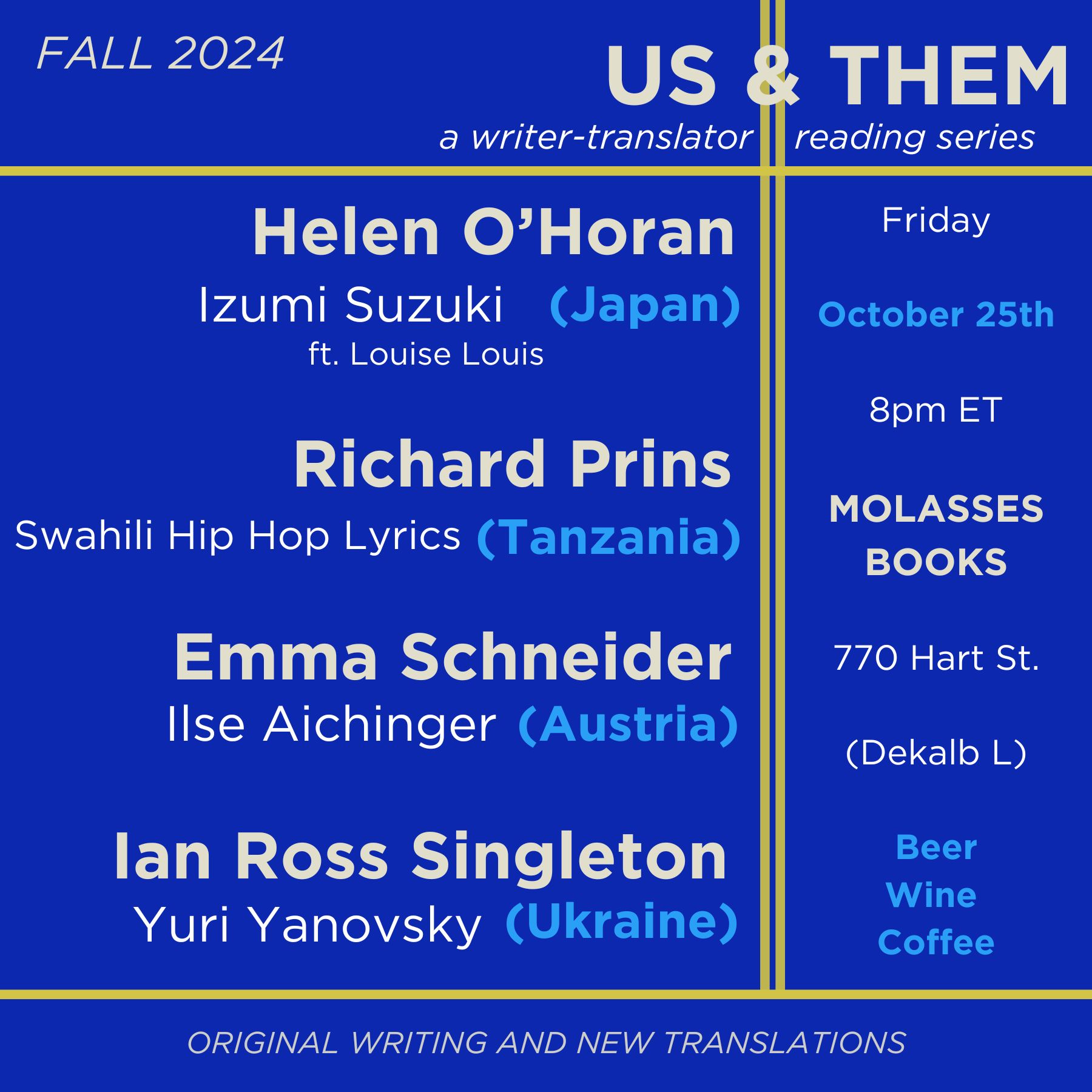
As a bonus, you can hear me read some excerpts next week at the Us&Them Reading Series:

In other news, The Best American Essays 2024 officially comes out a week from today. In the first review, Publishers Weekly named my “formally ambitious” contribution a high point. I am most grateful to editor Wesley Morris for selecting it, and for these kind words in his introduction: “Some of these essays are marvelous experiments in style whose nerve and frankness disarm you. Here, none more so than Richard Prins’s. A single preposition becomes a reply that becomes an after-school punishment that becomes a parental emergency that is also a writer in astounding psychological bloom. Halfway through, I knew he’d pull this off and said aloud, ‘bravo.'”

I can also finally announce – almost exactly a year after it was accepted for publication — that my translation of Katama Mkangi’s novel Walenisi will be published by University of Georgia Press as part of their African Language Literatures in Translation series, edited by Alexander Fyfe and Chris Ouma. Acquiring the rights for the novel was an extensive process, so I am thankful to UGA Press for sticking it out.

Best American Essays & other things

I am exhilarated (and more than a bit frightened) to announce that my essay “Because: An Etiology” has been selected for inclusion in The Best American Essays 2024. This essay went through many drafts, different versions, and countless submissions; over the years it received more personalized, “almost” rejections than any other essay I’ve written. So I knew there was something there — and I am especially grateful to Potomac Review for plucking it out of the slush pile! The anthology will be out in October.

Also, as part of their series profiling NEA Translation Fellows, The Center for the Art of Translation asked me a few questions for their blog about translating Walenisi. You can read my answers here!

Finally, my translation of an excerpt of Tom Olali’s experimental Swahili novel The People of Gehenna appears in the latest special issue of Michigan Quarterly Review, guest edited by Chris Abani. You can read and hear a recording of the first few pages of the translation here.

NEA Translation Fellowship

I am excited to announce that the National Endowment For the Arts has awarded me a Translation Fellowship! I am especially honored, because this is the first time the NEA has supported a translation from Swahili – and profoundly grateful that this honor has gone to a text as courageous and speculative as Katama Mkangi’s Africanfuturist novel Walenisi. You can read more about the fellowship here – and read an excerpt from the novel in the collection No Edges: Swahili Stories.

some writing about translation

When I started translating Swahili poetry two and a half years ago, I certainly did not anticipate that it would lead me to write an academic paper. But I found the process of translating this particular poem by Muyaka bin Haji al-Ghassaniy so fascinating that I needed another outlet to share everything that happened behind the scenes. You can read the fruit of my agonies “The Dance of the Spinning Top: Translating Resistance in the Poetry of Muyaka” in the new issue of Swahili Forum.

For a much shorter read, I recently had the opportunity to share some thoughts about translating Katama Mkangi’s Africanfuturist Swahili novel Walenisi for Asymptote‘s blog, as part of a new series profiling this year’s PEN/Heim grantees.

And finally, you can read my translation of the first chapter of Walenisi in No Edges: Swahili Stories, the first collection of Swahili fiction to be translated into English. (Publishers Weekly recently called it “a literary feast,” and named my excerpt the “highlight”).

AWP, No Edges, other new stuff

Somehow I have managed to never attend the annual AWP conference – but this Thursday afternoon I will be on a panel “A Universe with No Edges: Swahili Literature in Translation” together with fellow contributors to No Edges: Swahili Stories (Two Lines Press).

No Edges will be the first collection of Swahili fiction published in English translation, and features two of my translations – a fantastical send-up of the horror genre “A Neighbor’s Pot” by my friend Lusajo Mwaikenda Israel (formerly of the seminal Bongo Flava group Daz Nundaz), as well as the first chapter of Katama Mkangi’s Africanfuturist novel Walenisi (for which I recently won a Pen/Heim grant).

So if you’ll be at AWP, I’d love to see you. Or if you don’t know what AWP is (do I? I definitely never figured out what the acronym actually stands for) then you can just order the book!

I will also be presenting at Montgomery College’s Confluence translation conference on March 25 on “Transplanting Poetic Form: Tending the Roots of Swahili Verse”.

Speaking of Swahili verse, two more of my Muyaka translations have appeared recently at Harvard Review Online, and others will appear soon in the upcoming issues of Bennington Review and Washington Square Review.

And finally, a little over a year ago, Spry Literary Journal was kind enough to interview me as a former contributor. I didn’t notice when the interview was posted back in December (possibly because my name somehow mutated into “Richard Prin”).

Pen/Heim grant

I am excited to announce that I have been awarded a Pen/Heim Translation Fund grant for my translation-in-progress of the Africanfuturist novel Walenisi by Katama Mkangi.

You can read about the other awardees here.

The judges’ citation reads: “A touchstone of Kenyan literature, Katama Mkangi’s Walenisi begins with a reimagination of events from the dictatorial Kenyatta and Moi regimes. The novel’s protagonist, sentenced to death for “talking too much,” miraculously escapes his fate by piloting the space ship intended as his grave to the utopian planet Walenisi, where a journey of self-discovery begins. Blending parable and science fiction, Mkangi, who was imprisoned for his pro-democracy advocacy, satirizes global capitalism and postcolonial authoritarianism while presenting a speculative vision of an egalitarian future. Richard Prins translates this thrilling ride with humor and verve — a rare chance for English-speakers to read an Africanfuturist work originally written in an indigenous African language.”

On a more personal note, I first read Walenisi about fifteen years ago while studying Swahili as an undergraduate. Though I wasn’t yet fluent in the language, I could easily discern what wild and courageous vision was at play in this novel. I didn’t get around to rereading the novel until I came across a copy in a bookstore in Dar es Salaam last summer. I didn’t even think about translating it, because at that point I was so immersed in Swahili songs and poetry. But through a set of serendipitous circumstances, I wound up translating the first chapter for an anthology of Swahili fiction that will be published by Two Lines Press next year – and now, with the encouragement of this grant, I am hopeful about taking on the rest of the novel.

Meanwhile, back on the poetry front, several of my translations of the 19th century Mombasan poet Muyaka bin Haji al-Ghassaniy have appeared lately, such as “He Shuns Me” in Rattle, “Days of Eating Junk” in Action, Spectacle and “What Would You Do For a Treat?” in Tampa Review.